Porto – Light, River and the Rhythm of the Atlantic
Porto’s Story in Stone and River Light
View on Ribeira from Gaia riverbank
Porto is a city shaped by water and granite. The Douro curves through its centre like a living thread, reflecting the colours of tiled façades, steep stairways and the arches of its iconic bridges. The old town rises in layers, each street revealing a mix of medieval foundations, baroque churches and narrow lanes that open suddenly into wide river views. The city feels both ancient and youthful, grounded in tradition yet full of creative energy. You sense it in the cafés, in the sound of trams rattling uphill and in the way locals gather along the riverbanks at sunset.
Walking through Porto, you notice how the light shifts across the city. Morning sun touches the rooftops of Ribeira. Afternoon warmth settles on the façades of Vila Nova de Gaia. Evening brings a soft glow over the Douro, turning the water into a ribbon of gold. Porto invites you to slow down, to follow the curve of a staircase or the sound of a guitar from a riverside bar. It is a city where architecture becomes atmosphere, where history feels lived in and where the river shapes the rhythm of daily life.
Arriving in Porto – First Impressions of the Douro
Arriving in Porto by plane offers a gentle introduction to the region. As you descend into Francisco Sá Carneiro Airport, the coastline appears in soft blues and greens, and the city’s hills rise behind it. The airport is calm and efficient, with easy connections into the centre by metro, bus or taxi. The journey takes you past residential neighbourhoods, glimpses of the Atlantic and the first signs of Porto’s tiled architecture. The air feels fresh, carrying a mix of sea breeze and warm stone. Porto welcomes you quietly, with a sense of authenticity that reveals itself gradually.
Arriving by train brings a different kind of charm. Campanhã Station is the main arrival point for long distance routes, and from here a short local train or metro ride leads into São Bento, one of Europe’s most beautiful stations. Stepping into its hall of blue and white tiles feels like entering a story told in ceramics. The transition from train to city is seamless, and the streets around the station immediately pull you into Porto’s historic centre.
Landmarks and Riverfront Stories
Porto’s Icons – Bridges, Riverbanks and Stories in Stone
The Dom Luís I Bridge is Porto’s most iconic landmark, a sweeping metal arch that connects Ribeira with Vila Nova de Gaia. Walking across it offers some of the best views in the city. The river stretches below, the old town rises in layers and the colours of Gaia’s wine cellars line the opposite bank. From the lower level, the bridge feels monumental. From the upper level, it becomes a balcony over the Douro, perfect for photography at sunrise or sunset.
Nearby, the Muralhas Fernandinas stairways offer a more intimate perspective. These medieval walls climb steeply from the riverbank, revealing narrow paths, unexpected viewpoints and bursts of street art. The climb can be challenging, but the reward is a panoramic view over Ribeira, the bridge and the curve of the river. It is one of Porto’s most atmospheric corners, where history and creativity meet.
Dom Luís I Bridge
The Miradouro da Ribeira adds another layer to these river views. From here, you can see the old town cascading towards the water, the boats drifting along the Douro and the bridge rising above it all. The viewpoint captures the essence of Porto’s geography, where steep hills, tiled façades and river reflections create a scene that feels both dramatic and peaceful.
The Cathedral of Porto stands on one of the highest points in the city. Its fortress‑like structure and baroque details reflect centuries of history. The square in front of the cathedral offers wide views over the rooftops, and the cloisters inside reveal beautiful azulejos that tell stories of faith and tradition. It is a place where the city’s medieval roots feel close.
Ribeira and Cais de Gaia form the heart of Porto’s river life. On the Porto side, Ribeira’s narrow streets open into a lively waterfront lined with cafés, restaurants and small bars. On the Gaia side, Cais de Gaia stretches along the river with wine cellars, terraces and wide promenades. Both sides are perfect for an easy evening, where you can sit by the water, watch boats pass and enjoy the city’s gentle rhythm.
São Bento Station is one of Porto’s most beautiful interiors. The waiting hall is covered in blue and white tiles that depict historical scenes, rural life and moments from Portugal’s past. The station feels like a living museum, and the contrast between its ornate hall and the everyday movement of travellers creates a unique atmosphere.
Porto’s Quiet Corners and Atlantic Calm
The Torre dos Clérigos offers one of Porto’s most distinctive silhouettes. The tower rises above the old town, and walking down Rua dos Clérigos reveals its height and elegance from different angles. The street itself is lively, lined with shops and cafés, but the tower adds a sense of history and verticality that shapes the neighbourhood’s character. From the top, the views stretch across the city in all directions, revealing rooftops, church spires and the distant river.
The tram to Foz do Douro offers a gentle escape from the centre. The historic vehicle rattles along the riverbank, passing old houses, quiet streets and the wide expanse of the Douro as it approaches the Atlantic. At the end of the line, the Fortaleza de São João da Foz stands guard over the coastline, its stone walls facing the open sea. Nearby, the Felgueiras Lighthouse marks the point where river meets ocean. Waves crash against the breakwater, and the beaches stretch in soft curves along the shore. It is a place where you can breathe deeply, watch the horizon and feel the rhythm of the Atlantic.
Rua das Flores adds a different kind of calm. This pedestrian street is lined with boutiques, small galleries and cafés. The façades are colourful, and the atmosphere feels relaxed and welcoming. It is an ideal place for slow wandering, where you can browse local crafts, enjoy a coffee or simply observe the flow of daily life.
The tram to Foz do Douro
Staying in Porto – From River Views to Hilltop Streets
Porto’s neighbourhoods offer different rhythms depending on the kind of trip you have in mind and matching them to the right traveller type can shape the whole experience. First time travellers often feel most at home in Ribeira. Staying close to the river, with the Dom Luís I Bridge in sight and the old town rising behind you, makes it easy to explore the city’s main highlights on foot. The atmosphere is lively, the views are memorable and you are never far from a café or a small restaurant.
Backpackers and budget travellers tend to gravitate towards the areas around São Bento and Aliados. Here, hostels, simple guesthouses and affordable eateries sit within walking distance of the station, the cathedral and the river. The streets are busy enough to feel energetic but still manageable, and public transport connections make it easy to move further out when needed. Families often prefer a slightly calmer base. Vila Nova de Gaia, on the opposite bank, offers wider promenades, more space and a gentler pace, while still keeping the river and the bridge within easy reach. The views back towards Porto are beautiful, and the atmosphere feels relaxed without being remote.
Seasoned travellers might choose to stay near Clérigos or in Cedofeita. These areas blend everyday life with culture and creativity. Around Clérigos, you are close to independent shops, galleries and cafés, and the streets invite slower exploration. Cedofeita feels more residential, with local restaurants and quieter corners that reveal a different side of the city once you step away from the main routes. Senior travellers usually appreciate neighbourhoods that are central but not too steep, with good pavements and straightforward access to transport. The flatter parts of Aliados and the Gaia riverfront work well in this sense, offering comfortable walks, clear connections and plenty of places to sit, pause and take in the view.
Getting Around Porto – Trams, River Paths and Easy Connections
Porto is easy to navigate, with a transport system that supports both exploration and relaxation. The metro connects the airport with the city centre and reaches major neighbourhoods, making it a practical choice for longer distances. Buses and trams add charm and flexibility, especially the historic tram that runs along the river towards Foz do Douro. Walking is one of the best ways to experience Porto. The city’s hills create natural viewpoints, and the riverbanks offer long, scenic paths that feel peaceful at any time of day.
Taxis and ride share services are widely available and useful for reaching hilltop areas or travelling late at night. The train network connects Porto with other cities in Portugal, including Aveiro, Braga, Guimarães and Lisbon. Porto’s compact size and varied transport options make it easy to explore without stress.
Porto’s Flavours – From Riverfront Tables to Atlantic Traditions
Porto’s food scene reflects its maritime heritage, its northern traditions and its love for simple, comforting dishes. Bacalhau appears in many forms, from Bacalhau à Gomes de Sá to Pastéis de Bacalhau. Each version highlights the city’s connection to salted cod and its ability to turn humble ingredients into rich flavours. Francesinha is Porto’s most famous indulgence, a layered sandwich covered in melted cheese and a savoury sauce. It is hearty, bold and unmistakably local. Caldo Verde adds a lighter touch, a warm soup of potatoes, kale and chouriço that feels both traditional and comforting.
Ribeira and Cais de Gaia are ideal areas for dining by the water. Restaurants line both sides of the river, offering seafood, grilled dishes and local wines. The atmosphere is relaxed, and the views of the bridge and the river create a natural backdrop for an easy evening. For coffee and brunch, C’alma Coffee offers a calm space with excellent brews, while 7g Roaster in Gaia combines speciality coffee with a stylish setting and a menu that suits both breakfast and lunch.
For beer lovers, Cervejaria Nortada brings a local craft touch to the city centre. The brewery offers a range of beers and a lively atmosphere, making it a good stop after a day of exploring. Porto’s food and drink scene blends tradition with creativity, offering flavours that feel rooted in place yet open to new ideas.
Torre dos Clérigos
Capturing Porto – River Light, Granite Streets and Atlantic Air
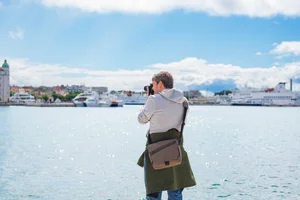
Porto is a city that rewards attentive photography. The river creates natural reflections, the bridges offer strong lines and the tiled façades add colour and texture. The Dom Luís I Bridge is one of the best places to capture the city’s geometry, especially at sunrise when the light touches the rooftops of Ribeira. The Muralhas Fernandinas stairways offer intimate compositions, with stone walls, street art and glimpses of the river below. São Bento Station provides a beautiful interior, where the blue and white tiles create patterns that work well for both wide shots and close details.
The tram ride to Foz do Douro adds coastal scenes to your portfolio. The lighthouse, the fortress and the waves crashing against the breakwater create dynamic images, especially in late afternoon light. In the old town, narrow streets, balconies and tiled houses offer endless opportunities for everyday photography. Porto’s mix of river, architecture and sea makes it a city where each neighbourhood adds a new visual layer.
Porto in Focus – A Brief Reflection
Porto is a city that lingers. Its river views, steep streets and Atlantic breeze stay with you long after you leave. The colours of Ribeira, the sound of trams, the taste of bacalhau and the glow of sunset over the Douro all become part of how you remember the place. Porto invites you to return, not because you missed something, but because it always has more to offer. It is a city of layers, where history, river life and coastal calm blend into a warm and welcoming whole.
I hope with all the above, I could help you plan your next trip to Porto. Feel free to leave a comment below or reach out if you need help with your travel planning.
Here is a link to my Porto site which hopefully gives you some ideas about what to expect.
Need more travel planning help? Contact me!