Barcelona Unfolded – Light, Colour and the Rhythm of the Mediterranean
Barcelona’s Story in Stone and Light
Barcelona is a city shaped by light. It settles on tiled pavements, softens the edges of Modernist façades and drifts across the sea in a way that feels unmistakably Mediterranean. Walking through the city, you sense how history and creativity coexist. Roman foundations sit beneath Gothic arches. Medieval guild streets open into the geometric clarity of Eixample. Gaudí’s imagination rises above it all, giving Barcelona a visual language that feels both organic and otherworldly.
Sagrada Familia
The city’s rhythm is gentle yet purposeful. Cafés spill onto pavements. Scooters hum along tree lined avenues. Markets fill with colour and movement. Barcelona invites you to explore at your own pace, to follow the curve of a mosaic bench or the shadow of a palm tree. It is a place where architecture becomes atmosphere, where neighbourhoods feel like small worlds and where the sea is never far from view.
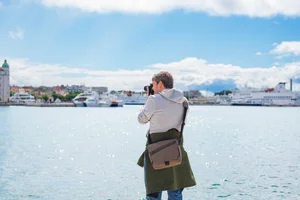
For a travel photographer, Barcelona offers a rare combination of structure and spontaneity. Light reflects off stone, glass and water in ways that shift throughout the day. Streets reveal new compositions with every turn. Whether you come for the landmarks, the food or the coastal calm, Barcelona rewards attention and curiosity. It is a city that stays with you long after you leave.
Arriving in Barcelona – First Glimpses of the Mediterranean
Arriving in Barcelona by plane feels like descending into a wash of Mediterranean light. As the aircraft approaches El Prat, the coastline curves beneath you in soft blues and golds, and the city’s grid begins to reveal itself with quiet precision. Inside the terminal, the atmosphere is calm and efficient, with clear signage and a steady flow of travellers. A short ride on the Aerobús, the metro or a taxi brings you towards the centre, passing palm lined roads, glimpses of the sea and the first hints of the city’s architectural rhythm. The air carries a mix of warm stone, coffee and salt. Barcelona does not rush to impress. It welcomes you with a gentle confidence.
Arriving by train offers a different kind of introduction. Barcelona Sants is a hub of movement, where long distance trains from Madrid, Paris and Valencia arrive with a sense of purpose. The station is practical and well connected, and stepping outside places you immediately in the city’s everyday flow. Buses, taxis and metro lines fan out in all directions. The journey into the centre is short, and the transition from station to street feels seamless. The city begins to unfold around you, one junction at a time.
Arriving by cruise ship brings yet another perspective. As your vessel approaches Port Vell, the skyline rises slowly, framed by the Columbus Monument, Montjuïc and the curve of Barceloneta Beach. The water reflects the morning light, and the city appears both modern and historic at once. Disembarkation is smooth, and within minutes you are walking along the waterfront or heading into the Gothic Quarter. Barcelona reveals itself gradually, with a calm assurance that you have arrived somewhere with depth, character and a rhythm all its own.
Barcelona’s Highlights and Everyday Beauty
Barcelona’s Landmarks – Architecture, Imagination and Sea Breeze
The Sagrada Família is the city’s architectural and emotional centre. Gaudí’s basilica rises in a forest of spires, each carved with symbolism and natural forms. Inside, coloured light filters through stained glass and transforms the space into a shifting spectrum. Columns branch like trees, creating a canopy that feels both sacred and sculptural. Even if you know the building from photographs, standing inside is a different experience. The scale, the light and the detail create a sense of wonder that is difficult to describe and impossible to forget.
Plaça de Catalunya, La Rambla, Plaça Reial and Mercat de la Boqueria represent the city’s urban heart. Plaça de Catalunya is the main crossroads, where elegant boulevards meet medieval streets. From here, La Rambla leads towards the sea. Flower stalls, cafés and performers create a lively atmosphere. Step into Mercat de la Boqueria and the energy intensifies. Colourful produce, fresh seafood and tapas counters fill the market. Just off La Rambla, Plaça Reial offers a palm lined square framed by arcades and lanterns designed by a young Gaudí. It is a place that feels both historic and social.
Down by Port Vell, the Barcelona Aquarium offers a calm, family friendly break from the city’s architectural intensity. Underwater tunnels bring you close to Mediterranean marine life. A short walk away, the Columbus Monument stands at the foot of La Rambla. The small viewing platform offers a compact but memorable panorama of the marina, the Gothic Quarter and the coastline. It is a simple combination of history and waterfront scenery that fits naturally into a day of exploring.
View over Barcelona from Park Güell
Park Güell shows Gaudí at his most playful. Mosaic benches, curved pathways and gingerbread like pavilions create a landscape that feels imaginative and open. The main terrace offers one of the best views in Barcelona. From here, the city stretches towards the sea in a soft gradient of colour and texture. The monumental zone requires a ticket, but the surrounding park is free and equally atmospheric. It is a place where architecture and nature blend seamlessly.
Barcelona’s city beaches are an extension of daily life. From Barceloneta to Bogatell, the coastline offers golden sand, volleyball courts and long promenades. Early mornings are peaceful, with joggers tracing the shoreline and fishermen preparing their lines. By afternoon, the beaches fill with swimmers and sunbathers. The Mediterranean breeze and warm light make the beaches an essential part of the city’s identity.
Barcelona’s Quiet Corners and Neighbourhood Calm
The Museu Nacional d’Art de Catalunya, MNAC, sits on Montjuïc and offers one of the most serene views in Barcelona. The museum’s terrace overlooks the city in soft layers. The grid of Eixample, the distant sea and the outline of the mountains create a panoramic scene that feels calm and expansive. The fountains below add movement and sound. It is a place where you can pause, breathe and take in the scale of the city, especially in the late afternoon when the light turns warm.
The Arc de Triomf, Ciutadella Park and the Cascada Monumental form one of Barcelona’s most elegant promenades. The Arc de Triomf, built for the 1888 World Fair, leads towards the park, where the atmosphere shifts into something softer and more inviting. Palm trees sway, musicians play quietly and families gather on the grass. The Cascada Monumental remains the dramatic centrepiece, with sculptures, water and golden details creating a theatrical composition, while the nearby Parlament de Catalunya adds a sense of civic presence. Beyond the fountain, the park opens into shaded lawns and a small boating lake where couples paddle across the water, children feed ducks and locals read under the trees. It is a peaceful place to rest between sights, reset your pace and simply watch the city breathe. Together, these elements blend architecture, nature and everyday life into one of Barcelona’s most graceful and calming spaces.
Poblenou’s backstreets reveal a quieter side of Barcelona. Away from the main rambla, residential streets feel calm and lived in. Pastel façades, small cafés and neighbours chatting from balconies create a local rhythm. Street art appears unexpectedly, adding colour to simple walls. It is an ideal area for slow wandering and everyday photography, where you can observe how the city lives beyond its central landmarks.
Staying in Barcelona – From Grand Avenues to Village Streets
Barcelona’s neighbourhoods each offer a different way of experiencing the city, and matching the right area to the right traveller type can shape the whole trip. For first time visitors, Eixample is an ideal base. Its wide boulevards, elegant architecture and central location make it easy to explore major sights. You can walk to the Sagrada Família, Casa Batlló and Passeig de Gràcia, and the area feels safe, well connected and full of cafés and restaurants.
Arc de Triomf
Backpackers and budget travellers often feel at home in El Raval. The neighbourhood is lively and diverse, with affordable food, hostels and nightlife. Narrow streets are filled with international eateries, vintage shops and creative spaces. Its central position makes it simple to reach the Gothic Quarter, La Rambla and the waterfront on foot, which keeps both time and costs under control.
Families tend to gravitate towards Gràcia. It feels like a small town within the city, with quiet streets, local shops and a network of pedestrian squares where children can play. The atmosphere is relaxed and community focused, and being close to Park Güell adds an easy, family friendly excursion to the mix.
Seasoned travellers often choose El Born. The area blends history, culture and a certain understated sophistication. Medieval streets lead to boutiques, wine bars and galleries. The Picasso Museum and Santa Maria del Mar add cultural depth. It is a neighbourhood that rewards curiosity and slower, more detailed exploration.
Senior travellers usually appreciate Sant Antoni. The district is calm and easy to navigate, with wide pavements, excellent cafés and a beautifully renovated market at its centre. It sits close to Montjuïc and is well connected by public transport, which makes it a gentle and practical base for exploring Barcelona at a comfortable pace.
Getting Around Barcelona – Metro Lines, Coastal Walks and Easy Connections
Barcelona is straightforward to navigate, which makes it easy to focus on the experience rather than the logistics. The metro is fast, frequent and connects all major neighbourhoods, including Eixample, Gràcia, Barceloneta and Poblenou. Most journeys take less than fifteen minutes, which works well when you are moving between landmarks such as the Sagrada Família, Park Güell and Plaça de Catalunya. Walking is equally practical. The city is compact and pedestrian friendly, with wide pavements and tree lined avenues that encourage you to explore on foot and notice details you would miss from a vehicle.
Cycling has become increasingly popular, supported by dedicated bike lanes and the Bicing system. The coastal promenade is particularly pleasant for relaxed rides. Taxis and ride share services are widely available and useful for late evenings or early departures. Reaching the airport is simple through the Aerobús, metro line L9 Sud or suburban trains, so you can arrive and leave without stress.
Barcelona’s Flavours – From Market Counters to Seaside Tables
Barcelona’s food scene reflects its mix of tradition, creativity and coastal life. Moritz, near Sant Antoni, is a good example of this blend. The historic brewery serves its own beer alongside Catalan dishes in a stylish industrial space, creating an atmosphere that feels both local and contemporary. Down by the Olympic Port, Barnabier offers fresh seafood with marina views. Grilled fish, paella and simple Mediterranean plates work particularly well after a morning at the beach, when you want something unhurried and connected to the sea.
Mercat de la Boqueria turns food into a sensory experience. Stalls overflow with colourful produce, fresh seafood, Iberian ham and ready to eat tapas. You can stop for a quick juice, sit at a counter for a plate of seafood or simply walk through and absorb the rhythm of daily trade. In the evening, Carrer de Blai in Poble Sec becomes a natural choice for a relaxed, budget friendly meal. Pintxo bars line the pedestrian street, each offering small bites on skewers that invite you to try a little of everything as you move from one place to the next.
In Poblenou, the food scene mirrors the neighbourhood’s creative character. Candende serves inventive dishes in a relaxed setting, while Hopiness focuses on craft beer and comfort food that suits a casual night out. Poblenou Roasting Company adds excellent coffee and a calm space for breakfast, a mid-day break or a quiet moment to review photos and notes from the day.
Capturing Barcelona – Light, Geometry and Mediterranean Colour
Barcelona is a city that lends itself naturally to photography, both for structured shoots and for spontaneous, everyday images. The variety of viewpoints, materials and light conditions means you can build a coherent visual story without ever feeling repetitive. Architecture, sea and neighbourhood life all contribute different layers to the same narrative.
Interior of Sagrada Familia
The terrace at MNAC is one of the strongest vantage points in the city. From here, Barcelona unfolds in clear layers, from the grid of Eixample to the distant sea and the soft outline of the mountains. Late afternoon and sunset are particularly rewarding. Warm tones settle over the rooftops, and the fountains below add depth and motion to wide shots. It is a place where you can work with both broad panoramas and tighter architectural frames, and where the city feels both large and legible.
Park Güell offers a different kind of visual material. Mosaic benches, curved staircases and organic structures create compositions that feel playful yet controlled. Early morning is the best time to visit if you want softer light and fewer people in the frame. From the main terrace, you can frame the city against Gaudí’s colourful designs, while closer details in the tiles and stonework lend themselves to more abstract or graphic images.
Along the coast, Barceloneta at sunrise provides a quieter, more contemplative setting. The beach is almost empty, the air is cool and the light is gentle. Joggers, fishermen and early swimmers add small human elements that help anchor wider scenes. As the day progresses, the promenade and cycle paths offer strong leading lines and a steady flow of everyday life, which works well for street photography with a coastal backdrop.
Across these locations, Barcelona supports a photography driven way of travelling. You can move from panoramic viewpoints to intimate details and from iconic landmarks to ordinary street corners and still feel that the images belong to the same story.
Barcelona in Focus – A Brief Reflection
Barcelona is a city that lingers. Its colours, flavours and rhythms stay with you long after you leave. The glow of Montjuïc at sunset, the hum of La Rambla, the quiet charm of Poblenou and the taste of seafood by the sea all become part of how you remember the place. Barcelona invites you to return, not because you missed something, but because it always has more to offer. It is a city of layers, where architecture, culture and coastal life blend into a warm and welcoming whole, and where each visit can focus on a different angle without losing the thread of the story.
I hope with all the above, I could help you plan your next trip to Barcelona. Feel free to leave a comment below or reach out if you need help with your travel planning.
Here is a link to my Barcelona site which hopefully gives you some ideas about what to expect.
Need more travel planning help? Contact me!